
Chicago masonry guides — answer-first reference.
Five short reference pieces for Chicago masonry — what a lintel is, what tuckpointing and repointing mean (and when they're different), how to read the signs your brick wall needs repair, a vocabulary of the trade, and a per-service cost guide. All written to be cited from, not skimmed.
Pick your question.
Each guide answers a single core question and links to the service page that handles the work.
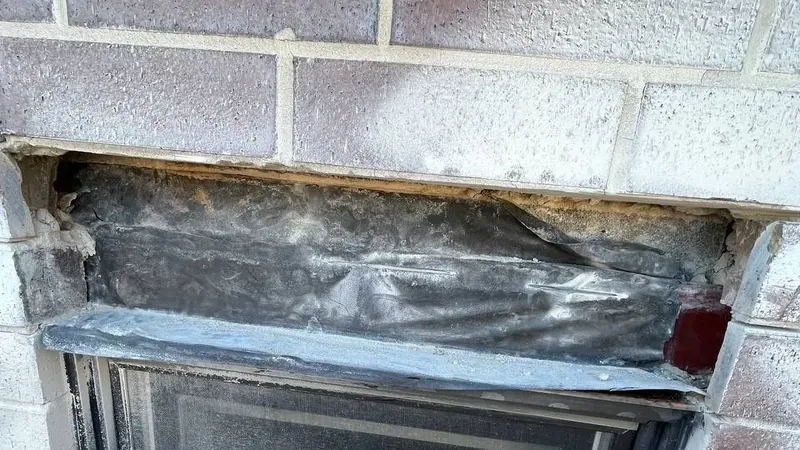
What is a lintel?
Types (steel/stone/concrete), signs of failure, the 7-step replacement process and Chicago Facade Ordinance scope.
Guide · comparison
Tuckpointing vs repointing
In modern Chicago practice they're synonymous. The historic distinction is real but rare in the field today.
Guide · diagnostic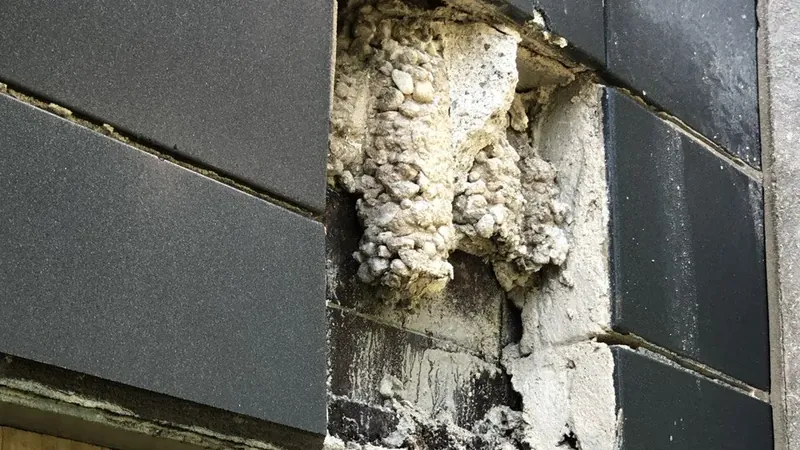
Signs your brick needs repair
The early warning signs — spalling, mortar dust, hairline cracks, efflorescence — and what to check first.
Reference · 30 terms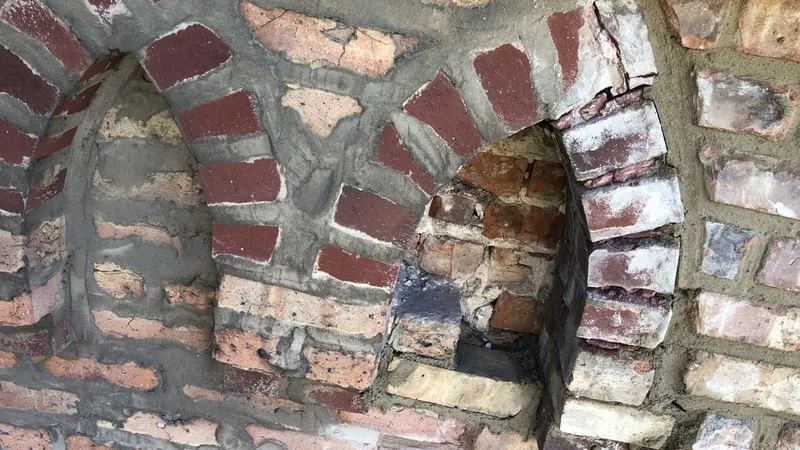
Masonry glossary
Wythe, mortar types, collar joint, parapet, soffit — the trade vocabulary in short definitions.
Cost · all services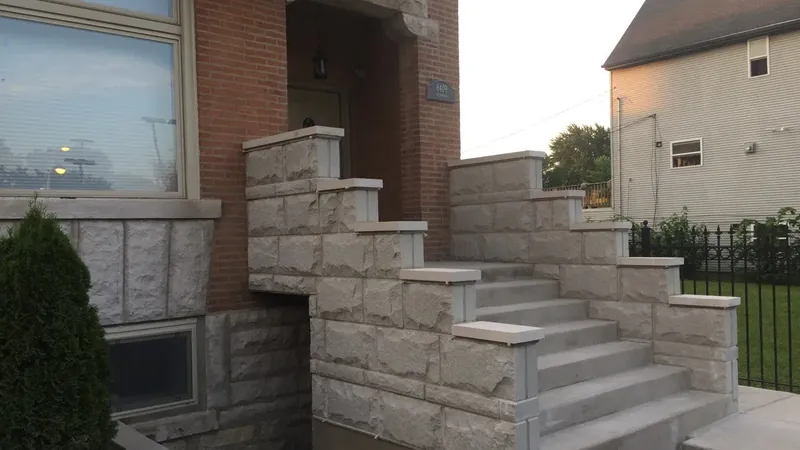
Chicago masonry cost guide
Per-service ranges across all five trades, neighborhood spread and Facade Ordinance scope.
Guide · mortar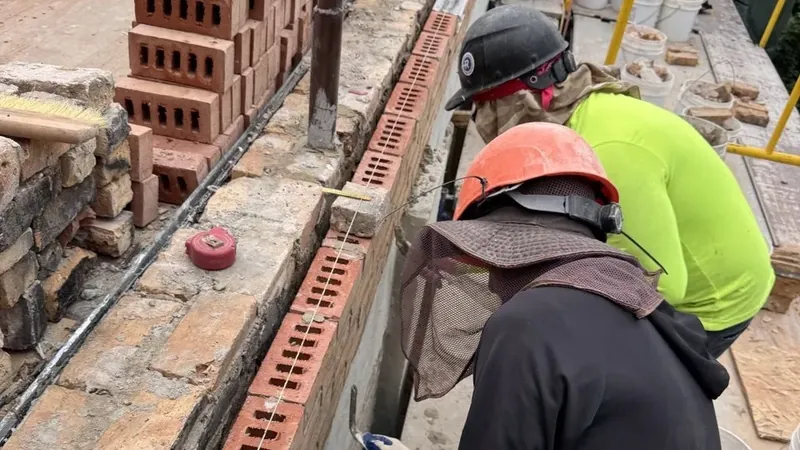
How long tuckpointing lasts
Matched mix and tooled joints on a Chicago wall — what drives a 25–30 year service life.
Guide · diagnostic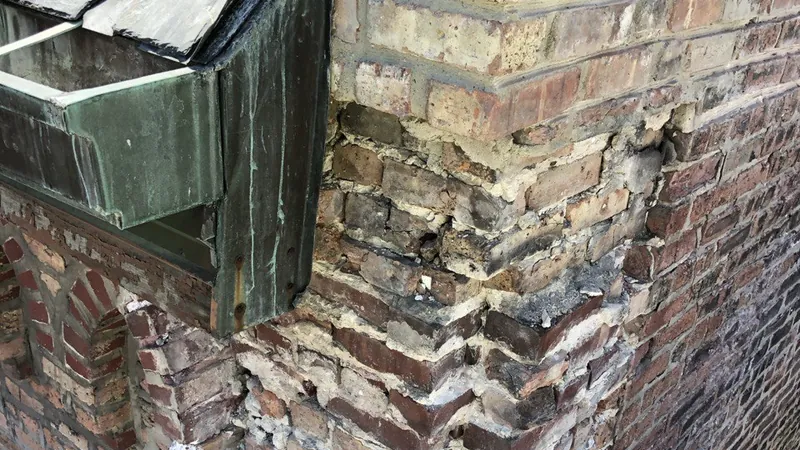
Efflorescence explained
The white staining on brick — what causes it, when it matters and how to remove it safely.
Guide · commercial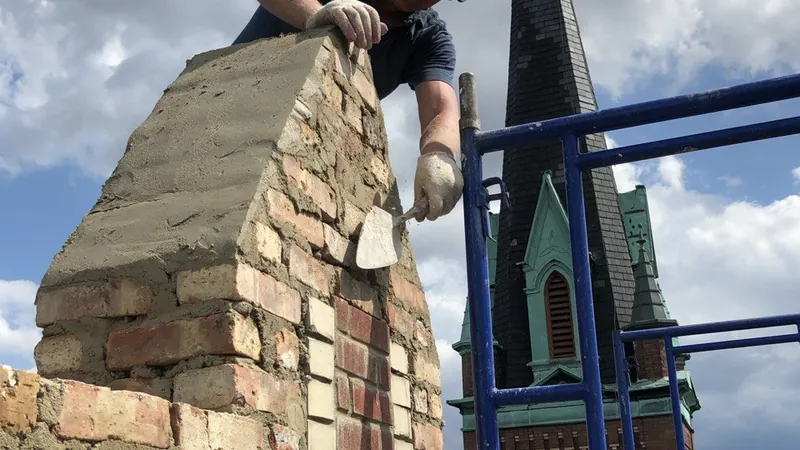
Parapet wall failures
Why parapets fail first, what an inspection looks for and when a rebuild is the right call.
Guide · code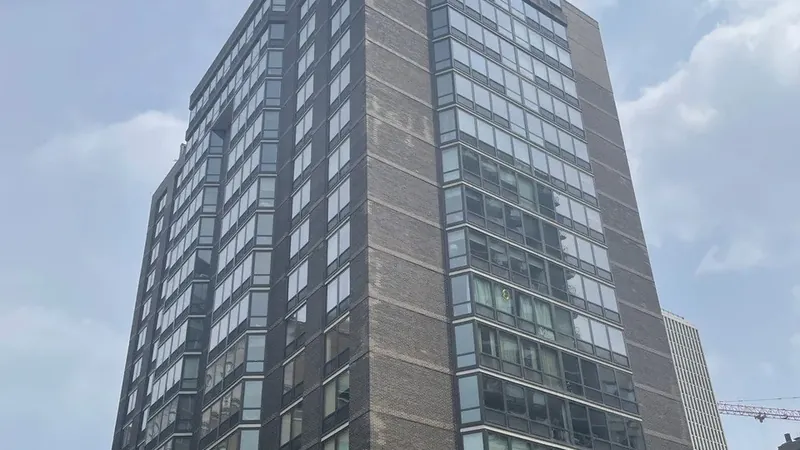
Chicago Facade Ordinance
Who it applies to, the inspection cycle and how critical-exam repairs are scoped.
Guide · repair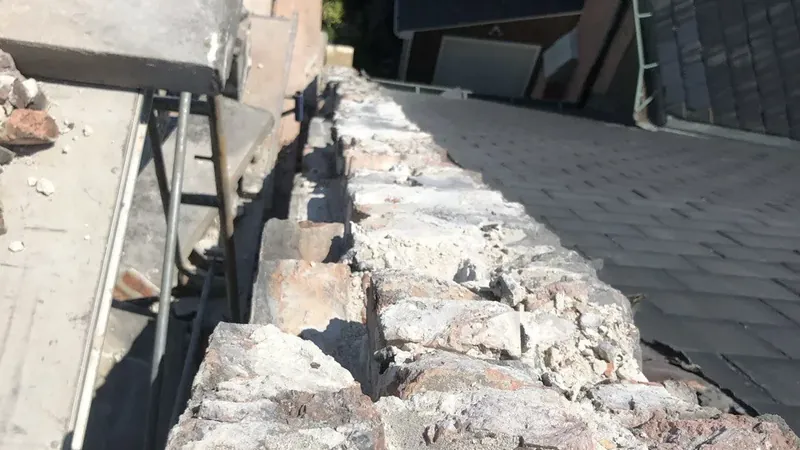
Spalling brick, explained
Why brick faces pop off, what water and freeze-thaw do, and when to replace versus repoint.
Guide · hardscape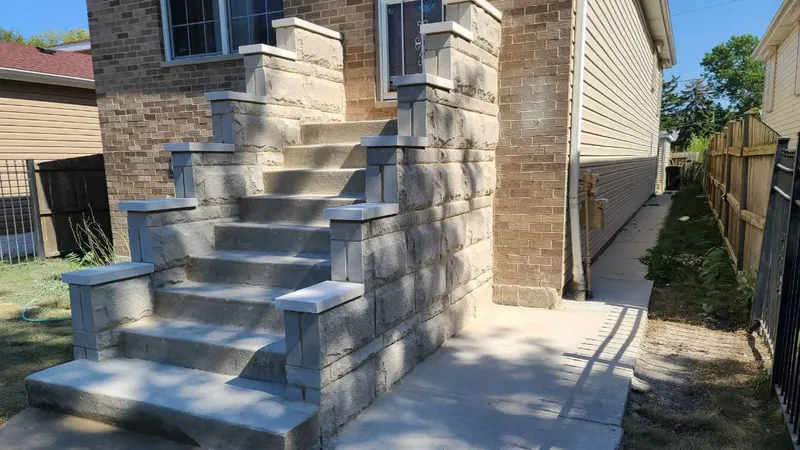
Brick pavers vs concrete
Patios and walkways — the trade-offs in cost, repair and longevity for a Chicago yard.
Direct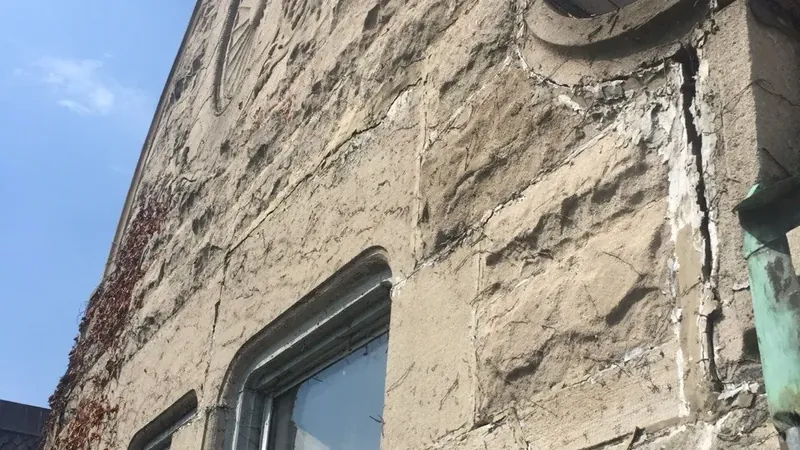
Not finding it?
Send the question. We answer same day during business hours — it probably lands in the next update.
Which guide should I read first?
I'm not sure what's wrong with my wall — which guide should I read first?
Start with Signs Your Brick Needs Repair — it walks the early warning signs and ties each one to a likely cause. If you've already seen diagonal cracks above a window or rust streaks from a steel piece, jump to the Lintel Guide instead.
What's the difference between tuckpointing and repointing?
In modern Chicago practice, tuckpointing and repointing are the same trade — grinding out failed mortar joints and replacing them with fresh, matched mortar. The historic distinction is real but rare in the field today. The vs-repointing guide covers both meanings.
Where do I find the cost ranges?
The cost guide consolidates per-service ranges across all five 312 Masonry trades — tuckpointing, brick repair, restoration, commercial facade and brick pavers — plus neighborhood differences, the permit question and Facade Ordinance scope.
Do I need a permit for tuckpointing in Chicago?
Most residential tuckpointing in Chicago does not require a permit. Permits apply for buildings 80 feet and taller (Facade Ordinance scope), addresses inside a Chicago Landmark district, and any structural work. The cost guide has the full answer.
What does "wythe" or "collar joint" mean?
Those are masonry trade terms. A wythe is a continuous vertical section of wall one masonry unit thick; a collar joint is the vertical mortar joint between two wythes in a multi-wythe wall. The masonry glossary defines those and 25+ other terms used across our guides and quotes.
Are these guides written for homeowners or contractors?
Both. The guides are written to be readable by a homeowner or condo board member who wants to understand what's happening on their wall, while being technically correct enough to be cited by another tradesperson. Each definition and number is sourced from working Chicago masonry practice.
The work behind the words.
Masonry Rebuilds
Complete rebuilds and restoration for commercial and residential properties.
Learn more
Brickwork
Expert brick installation and repair with attention to detail.
Learn more
Caulking
Professional caulking services to protect your building from water infiltration.
Learn more
Tuckpointing
Precise tuckpointing that strengthens and enhances the look of your brick.
Learn more
Brick Pavers
Patios, walkways and driveways in clay brick or stone — plus retaining walls and veneer.
Learn moreRead first, then call.
The guides are the reference. The quote is the read of your wall.